


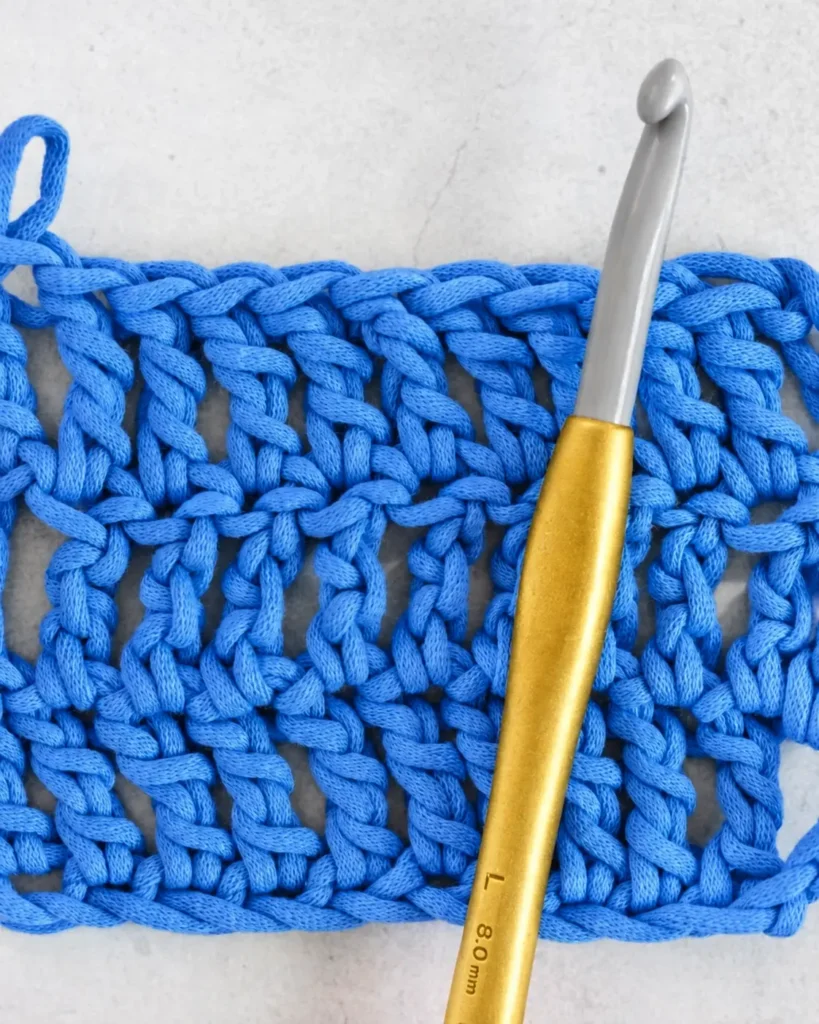
Treble crochet is a tall US crochet stitch made by wrapping the yarn over the hook twice, pulling up a loop, and drawing through the loops in pairs. It is also called triple crochet and is abbreviated tr.
This tutorial uses a small 15-stitch practice swatch to show the first row, later rows, joined rounds, increases, decreases, and the edge mistakes that most often change your stitch count.
Treble crochet at a glance
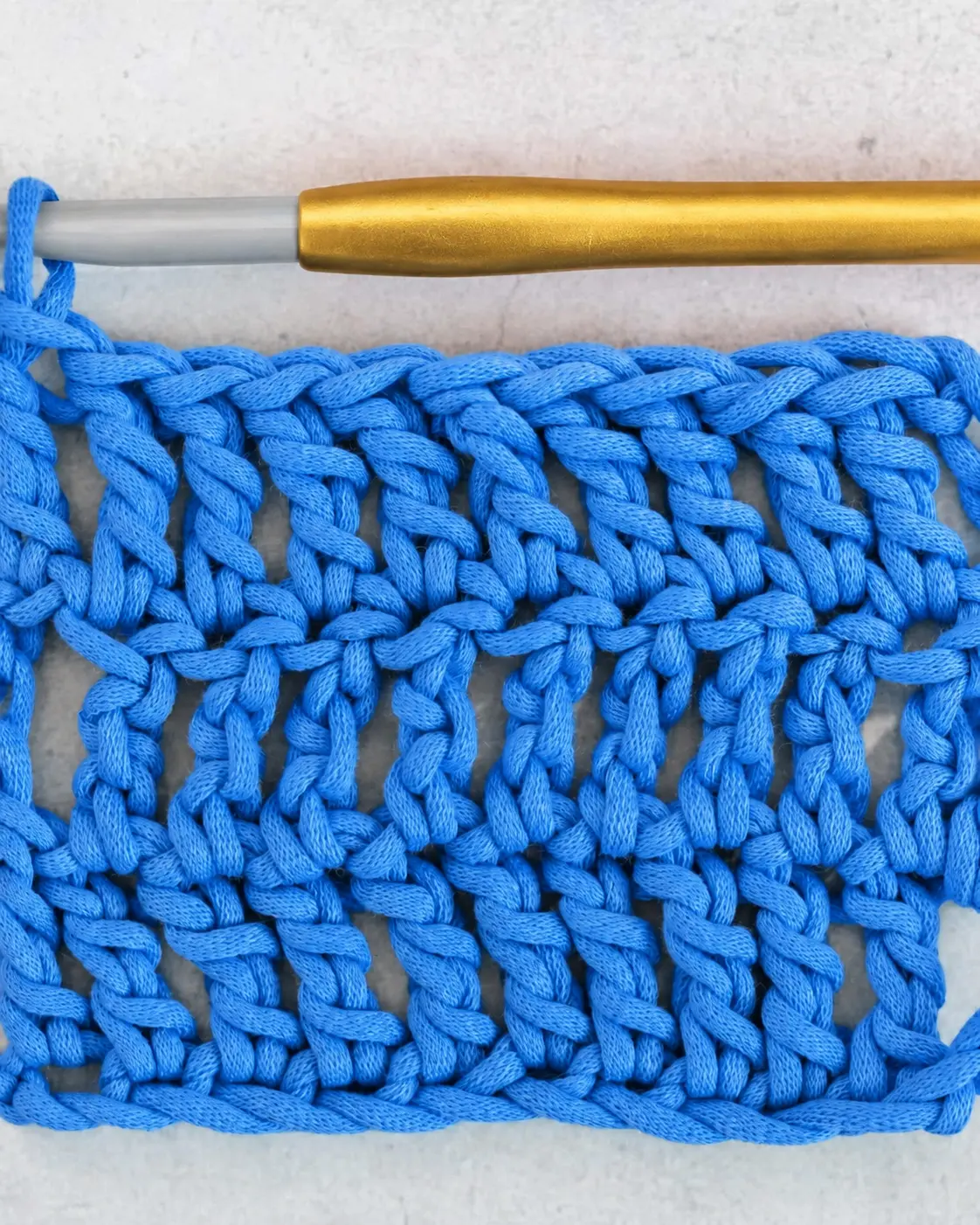
A treble stitch is taller than a double crochet because it begins with two yarn overs. Those extra wraps create a longer post, so rows grow quickly and the finished fabric has more open space and drape.
The motion is easy to remember: yarn over twice, insert the hook, pull up a loop, then yarn over and pull through two loops three times. Each pull-through completes one level of the post.
| Quick reference | US treble crochet |
|---|---|
| Abbreviation | tr |
| Initial yarn overs | 2 |
| Loops after pulling up a loop | 4 |
| Pull-through sequence | 2 loops, 2 loops, 2 loops |
| Turning chain in this exercise | Chain 4; counts as the first stitch |
This article uses US terminology. In UK terminology, the same stitch is called double treble crochet and written dtr. The Craft Yarn Council abbreviation list shows the standard US and UK term differences.
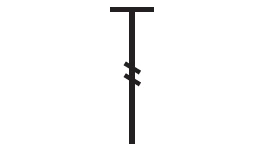
On a crochet chart, treble crochet is shown as a tall T-shaped symbol crossed by two diagonal bars. Always check the pattern key, even when it follows the standard chart symbols.
The long posts make treble crochet useful when you want height, movement, or an airy texture. It builds faster than shorter stitches, but the open spaces may be less suitable where warmth, firmness, or opacity matters.
Treble crochet is a beginner-friendly next step once you can make a slip knot, chain, yarn over, and recognize the top of a stitch. Review the first crochet practice square if those skills are new.
Loop counts are your best checkpoint. You should see three loops after the two starting yarn overs, four after pulling up a loop, then three, two, and one as you complete the three pull-throughs.
This practice method uses a chain-4 that counts as the first stitch. Some patterns use a shorter turning chain or say that it does not count, so let the pattern’s notes decide where your first and last stitches belong.
Gather yarn and set up a practice row
You need smooth yarn, a hook that suits the yarn, scissors, and two removable stitch markers. A ruler is optional if you want to compare the height of treble crochet with another stitch.
- Smooth, light-colored yarn
- Crochet hook in the size suggested on the yarn label
- Two removable stitch markers
- Scissors and a blunt yarn needle
Choose a light color and moderate texture so each loop is easy to see. Very fuzzy or dark yarn can hide the hook entry point, which makes it harder to diagnose a split strand or missed edge stitch.
The photos show right-handed working in US terms. A left-handed crocheter can reverse the direction across the row while keeping the same loop counts, stitch order, and edge rules.
For this exercise, make a slip knot and chain 18. You will treat the four skipped chains as the first treble crochet, then make 14 actual treble stitches for a total of 15 stitches.
The counting formula is simple: the chain-4 contributes one counted stitch, and the remaining 14 chains each receive one treble. If you choose a different foundation length, subtract three to find the total stitch count under this convention.
Make the first treble crochet
Hold the foundation chain close to the working area without squeezing it. The first complete treble will go into the fifth chain from the hook.
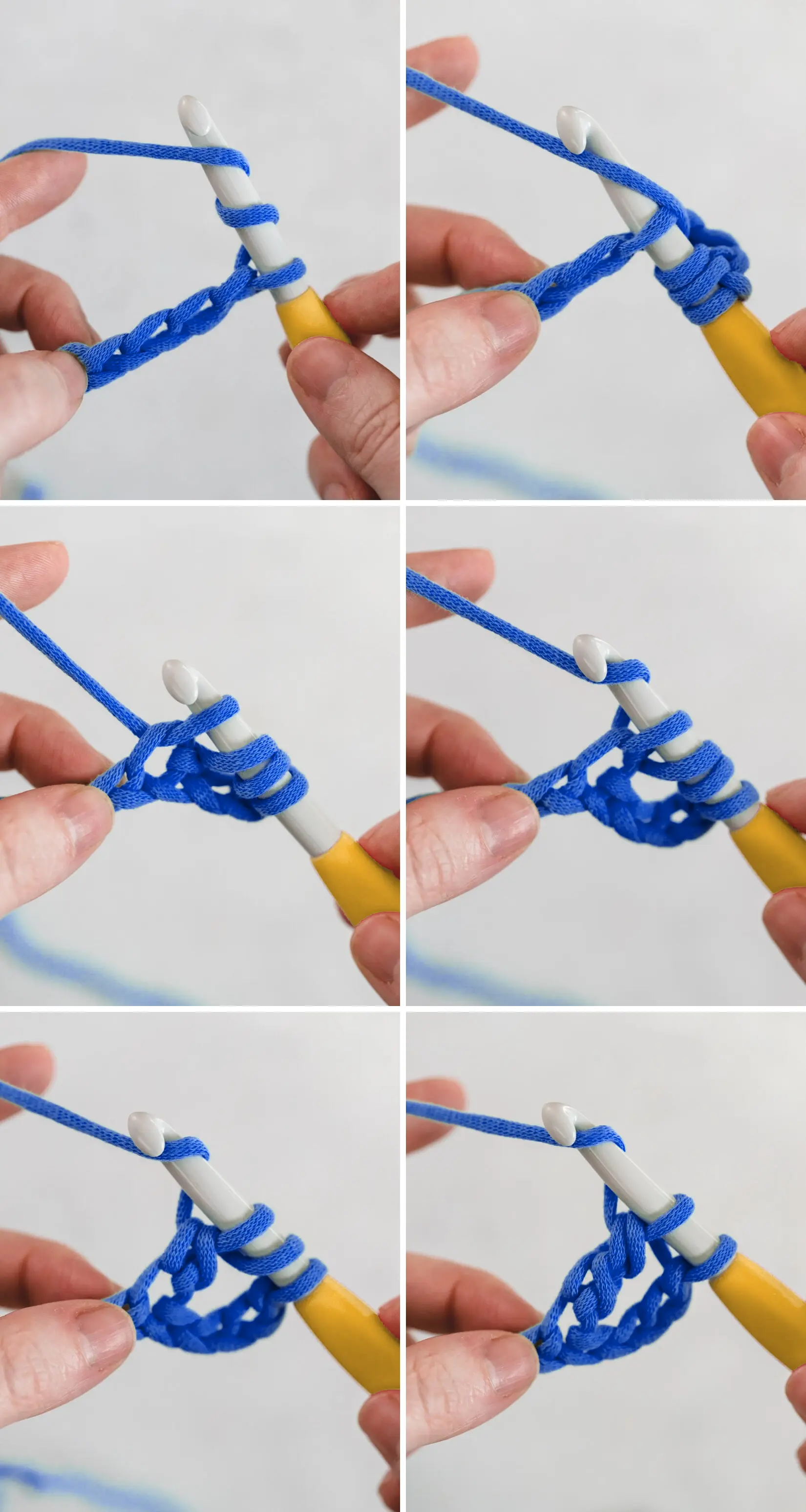
Yarn over twice, wrapping the working yarn over the hook from back to front two times. Including the live loop, there should now be three loops on the hook.
Count four chains away from the hook and insert the hook into the fifth chain. The skipped chain-4 will stand at the edge and count as the first stitch of the row.
Yarn over and draw the yarn through the chain. Four loops should be visible on the hook; if you see fewer, one starting yarn over probably slipped off.
Yarn over again and pull through the first two loops. Three loops remain, and the lower part of the tall post has begun to form.
Yarn over and pull through the next two loops. Two loops remain on the hook, with one more pull-through needed to close the stitch.
Yarn over once more and pull through the final two loops. One live loop remains, and your first actual treble crochet is complete.
The three pairwise pull-throughs are what give treble crochet its height. Work them steadily rather than stretching the hook upward; even loop size produces a straighter post.
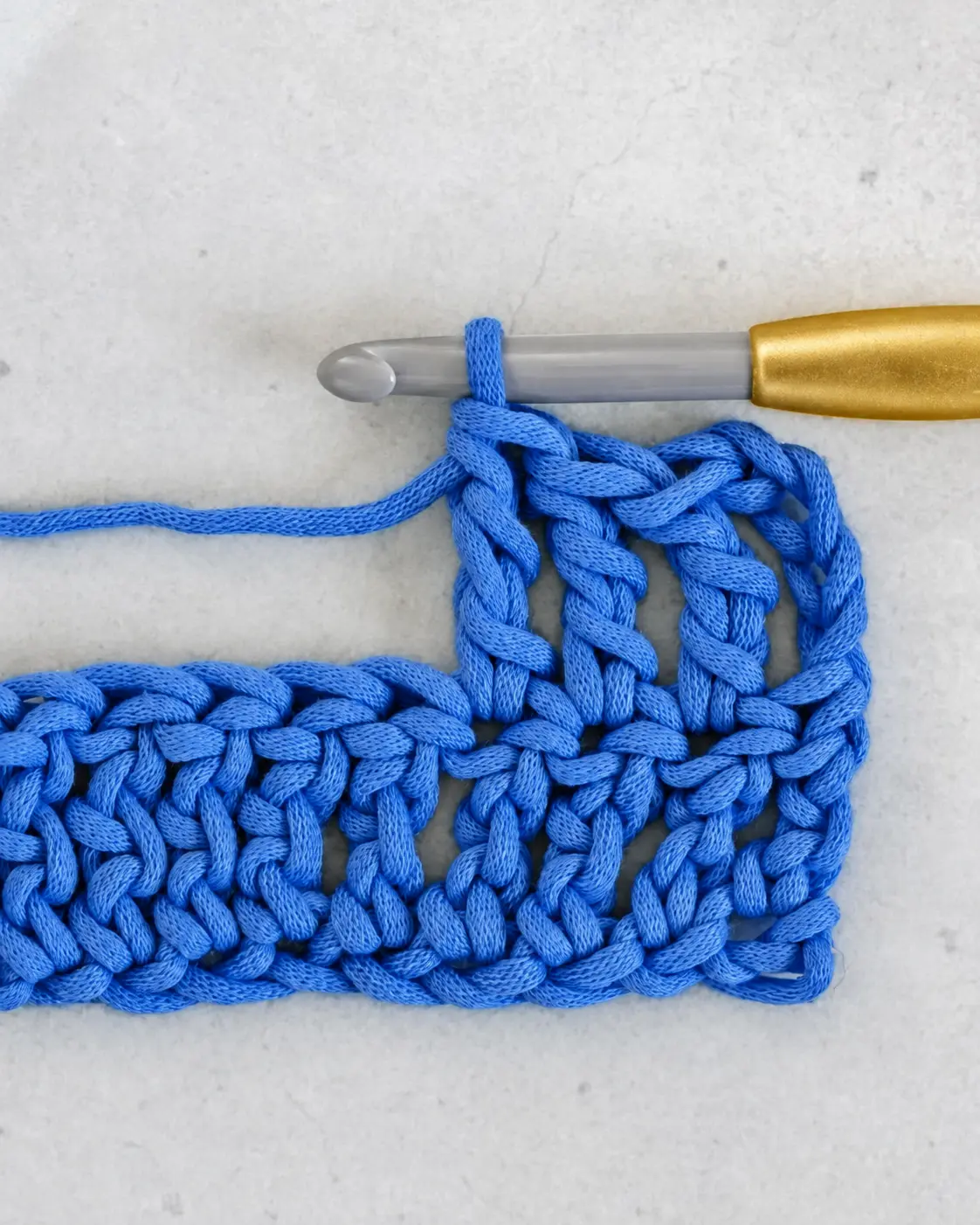
Continue with one treble crochet in every remaining chain. Keep your supporting fingers close to the next chain so the foundation does not twist while you insert the hook.
Count the row before turning. You should have 15 stitches: the starting chain-4 plus 14 worked trebles. Mark the chain-4 edge and the last actual stitch so both ends are easy to find later.
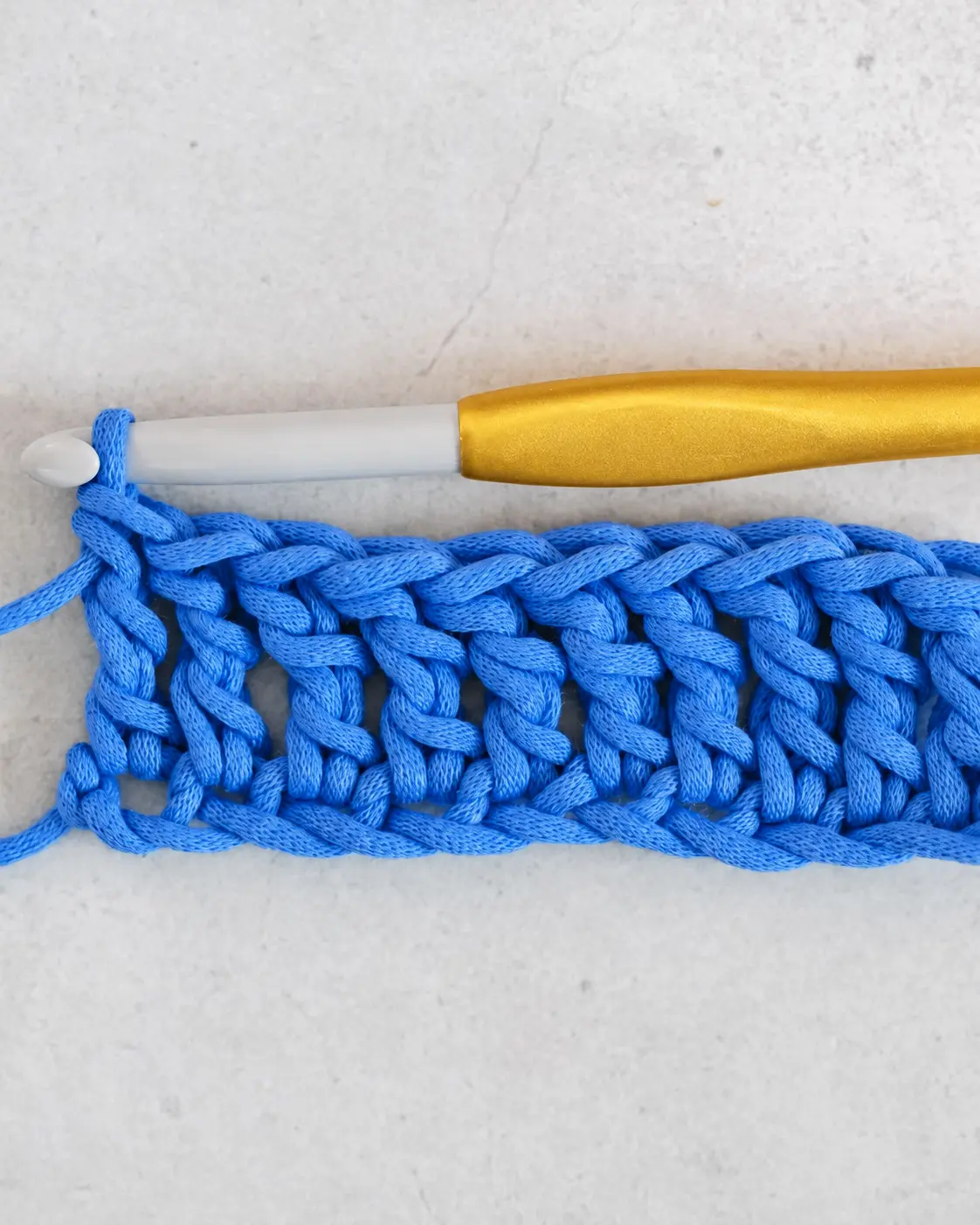
Turn and work the next row
Turn the work and chain four. Keep the chains relaxed but not oversized, because this chain-4 must reach the height of the treble stitches beside it.
Because the chain-4 counts as the first stitch, skip the first stitch at the base of that chain. Work the first actual treble into the second stitch of the row.
Make one treble in each stitch across. Insert under both top loops unless the pattern asks for a front-loop, back-loop, or post variation.
At the far edge, work the last treble into the top of the previous row’s chain-4. Missing that small top loop removes a stitch and makes the swatch narrower.
Count 15 stitches again, including the new chain-4. Move the edge markers up as you work; they are especially useful because tall stitches can lean and make the last entry point look farther away.
If a pattern says “chain 3” or “turning chain does not count,” do not use this placement automatically. Follow that pattern’s edge instructions and count convention from the first row onward.
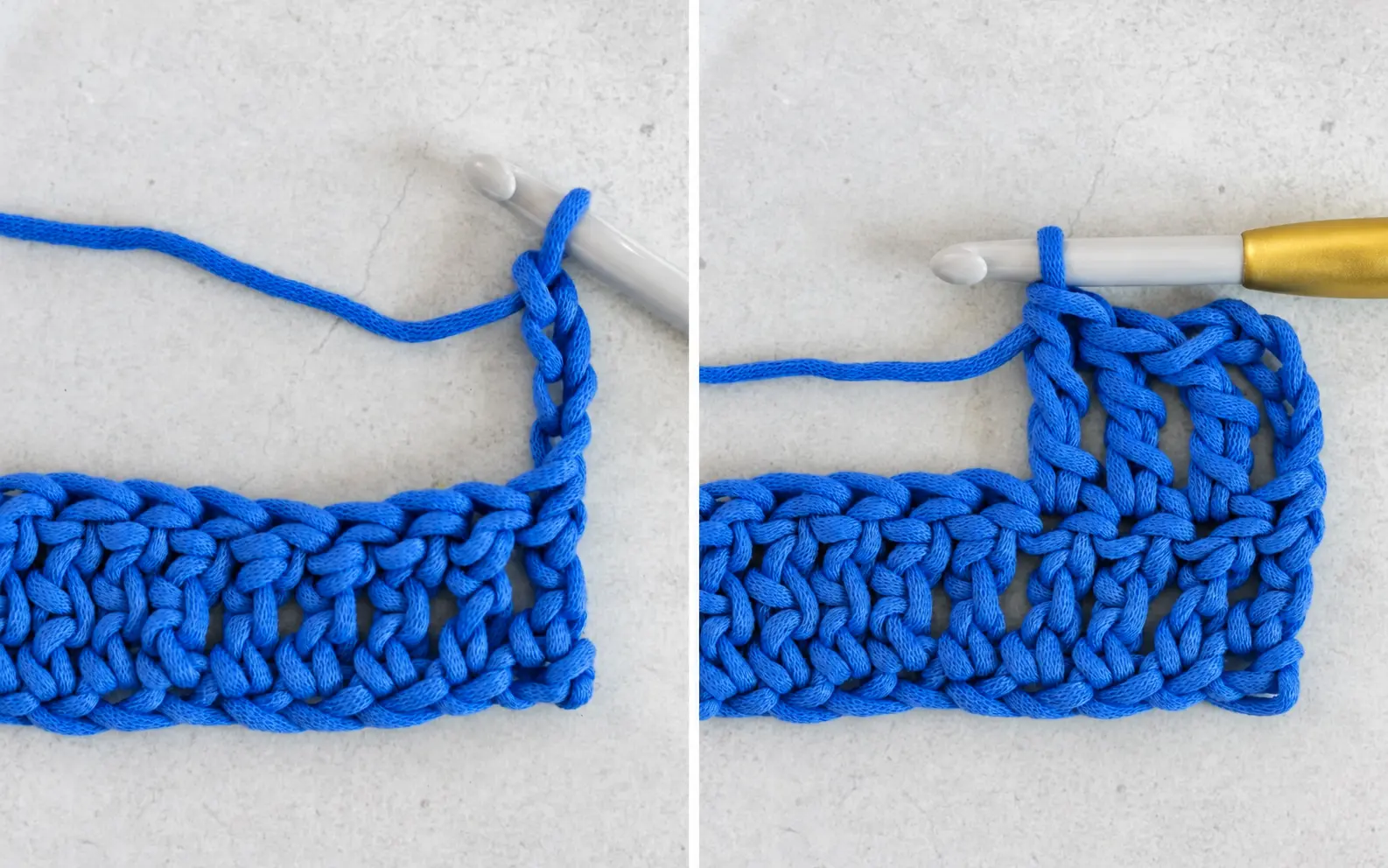
Work treble crochet in joined rounds
Treble crochet can be worked in rounds as well as rows. Many patterns join each round with a slip stitch so the tall starting chain and the end of the round meet at a defined seam.
Begin with the ring or foundation the pattern specifies, then chain four if that chain counts as the first treble. Place a marker in the first counted stitch before working around.
Work one treble in each stitch around. After the last stitch, join with a slip stitch to the top of the beginning chain-4, not to a lower chain link.
Start the next round from the same seam area unless the pattern says otherwise. A consistent join point helps the seam stack neatly and prevents accidental increases where the round begins.
Increase and decrease in treble crochet
To increase, work two treble crochet stitches into the same stitch or space. The shared base adds one stitch and lets the fabric widen without changing the stitch itself.
A pattern may write this as 2 tr in next st, tr inc, or another defined abbreviation. Read the key before starting because designers do not all format shaping instructions the same way.
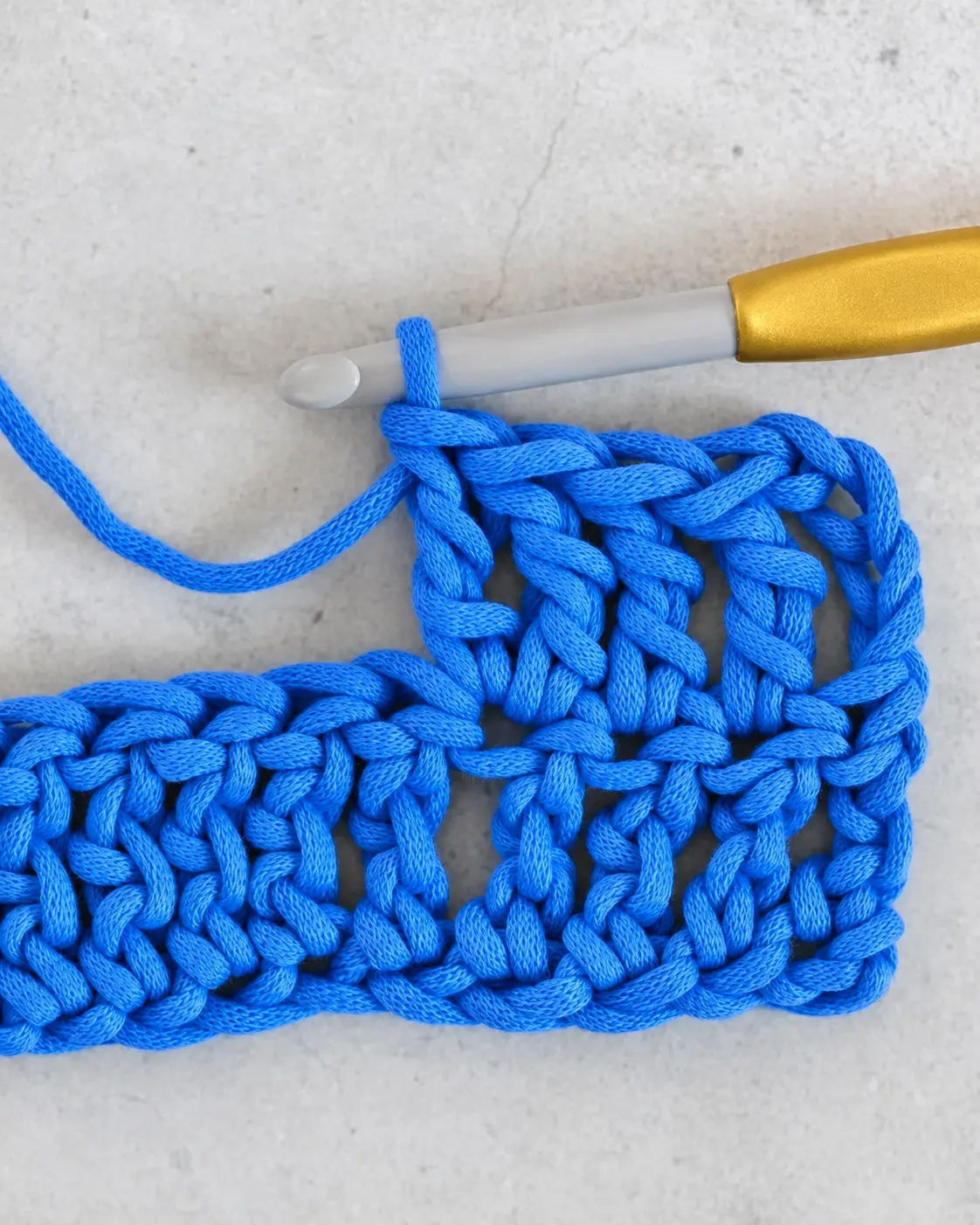
To decrease, use tr2tog, meaning treble crochet two stitches together. You begin a treble in each of two adjacent stitches but leave both unfinished until they can share one top.
Work the first treble through its first two pull-throughs and stop with two loops remaining. Yarn over twice, begin the next treble in the following stitch, and again stop before its final pull-through; three loops remain.
Yarn over and draw through all three loops. The two stitch bases are now joined at one top, so the next row sees one stitch where the previous row had two.
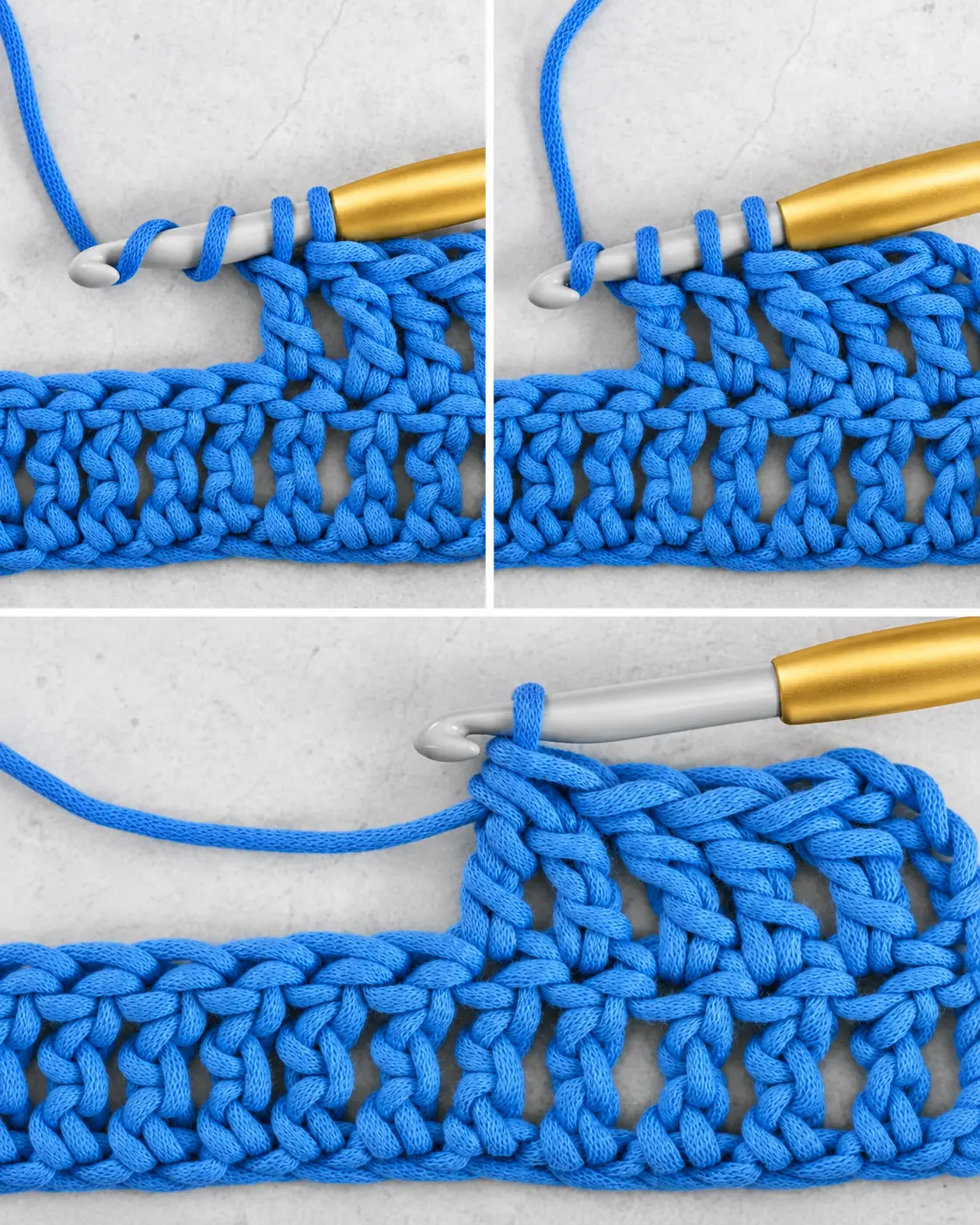
Fix common treble crochet problems
If the top loops look very loose, check the two starting yarn overs. Keep them close to the hook’s shaft and avoid lifting the hook high while pulling through.
If the posts lean or vary in height, slow down the three pull-throughs. Let the hook shaft size each loop, and keep the working yarn under similar tension from one stitch to the next.
If the swatch gets narrower, you are probably missing the final stitch in the top of the turning chain. Mark that top loop as soon as you make the chain-4.
If the swatch gets wider, check whether you worked into the stitch at the base of a counting chain-4. Skipping that stitch prevents an extra post at the beginning of the row.
If the hook splits the yarn, back it out and enter the complete stitch opening again. Smooth yarn, bright light, and a slightly looser foundation make the correct path easier to see.
| What you see | Likely cause | What to try |
|---|---|---|
| Row narrows | Last turning-chain top was missed | Mark the top of each chain-4 and count before turning |
| Row widens | Extra stitch at the base of the chain-4 | Skip the first stitch when the chain counts |
| Tall loops vary | Yarn overs or pull-throughs change size | Keep loops on the hook shaft and use steady tension |
| Yarn splits | Hook entered a strand instead of the opening | Remove the hook and reinsert through the full stitch |
Variations and good uses for treble crochet
Once the basic stitch feels consistent, try an extended treble (etr) or front- and back-post trebles (FPtr and BPtr). These change height or placement while keeping the familiar tall-stitch motion.
Even taller stitches begin with more yarn overs. A US double treble starts with three; a triple treble starts with four, followed by repeated pull-through-two steps. Check the pattern’s abbreviation before assuming its terminology.
Treble crochet suits airy scarves, lace panels, market bags, open cardigans, and mesh details. For a dense potholder, structured basket, or very warm fabric, a shorter stitch may provide better coverage and stability.
Practice, count, and continue
Make three or four rows of the 15-stitch swatch, counting after every row. Compare the first and last rows for even height, straight edges, and a chain-4 that blends with the neighboring posts.
Keep the swatch as a reference, then explore the Crochet learning hub for the current lessons. Written by Stacy for I Heart DIY; send a question if a step needs clarification.
Have a question? Use the form above to submit your question or comment.
I love hearing from you and seeing what you made!