


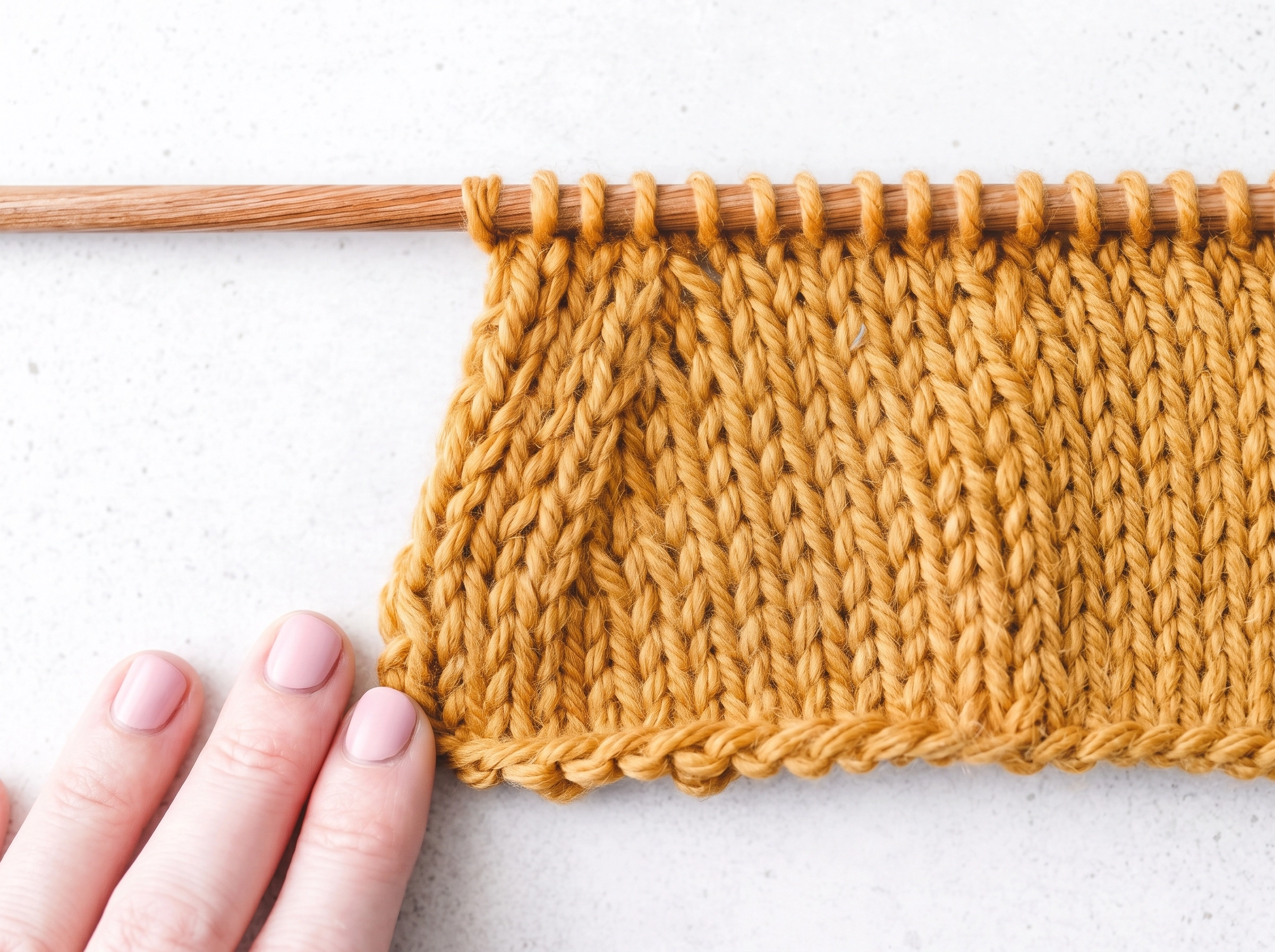
K2tog is the abbreviation for “knit two together.” It makes one new knit stitch from two stitches already on the left needle, reducing your stitch count by one.
The decrease leans right when you view it from the knit side. You will find it in shaping, lace, and any pattern that needs a simple rightward line of decreases.
K2tog at a glance
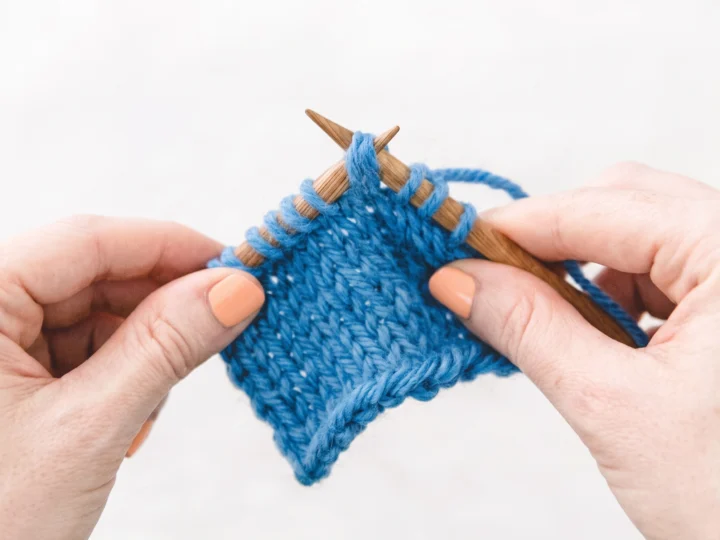
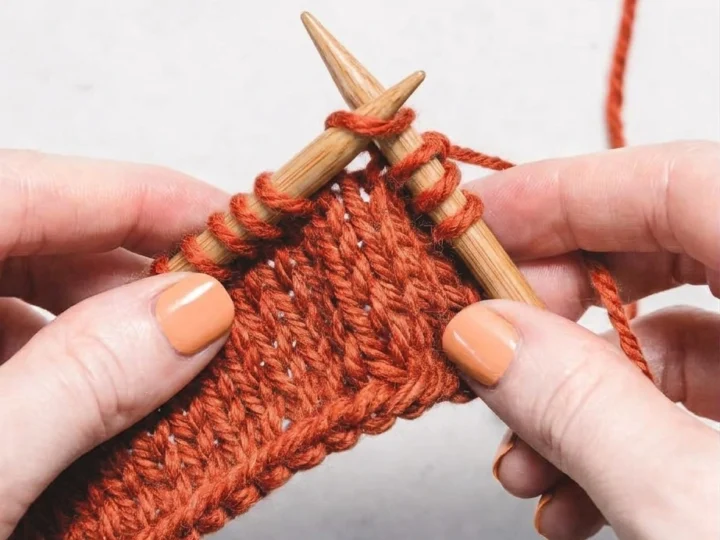
Put the right needle through the next two stitches on the left needle as if they were one knit stitch. Wrap the yarn, draw one loop through both, and let both old stitches leave the left needle.
In a pattern, k2tog means knit two together; capitalization may vary. The Craft Yarn Council abbreviation list calls it a single right-leaning decrease.
When to use this decrease
Shaping at a sleeve, crown, mitten tip, or other narrowing point often requires stitches to be removed. One k2tog uses two old stitches and leaves one new stitch, so the row total falls by one.
The rightward slant can be decorative. Pairing it with a left-leaning SSK decrease makes two sides of a motif or piece point toward or away from each other, depending on their placement.
Do not choose a decrease solely by the side of the garment. Follow the pattern's stated placement, since the desired direction changes with the design and the face you are viewing.
What you need before starting
Practice with two needles and a smooth yarn in a color that lets you see individual loops. Knit several plain rows so the decrease has fabric beneath it; our knit-stitch guide covers that foundation movement.
Keep the working yarn behind the needles for this knit-row instruction. Push the next two stitches close to the left-needle tip, where the right needle can enter without stretching them.




K2tog step by step
Look at the first two unworked stitches on the left needle. Enter both from the front with the right needle in the same direction you would use for an ordinary knit stitch.
Check that the right needle has passed through both stitches, not just the first one. If the second loop is tight, nudge it toward the tip of the left needle rather than pulling the fabric outward.

Wrap the working yarn around the right-needle tip as you would for a knit stitch. Draw one new loop through both old stitches at once.

Slide both original stitches off the left needle together. The single new stitch on the right needle is your completed k2tog.
Count the row to confirm the change. If there was one k2tog and no other shaping, there should be exactly one fewer stitch than at the start.
On the knit side, the top stitch of the decrease tracks toward the right. The slant is easier to see after a few ordinary stitches have been worked around it.


Try it in a practice swatch
Cast on 12 stitches and knit a few rows in stockinette. On a knit row, knit five stitches, work one k2tog over the next two, then knit the remaining five stitches; you should finish with 11 stitches.
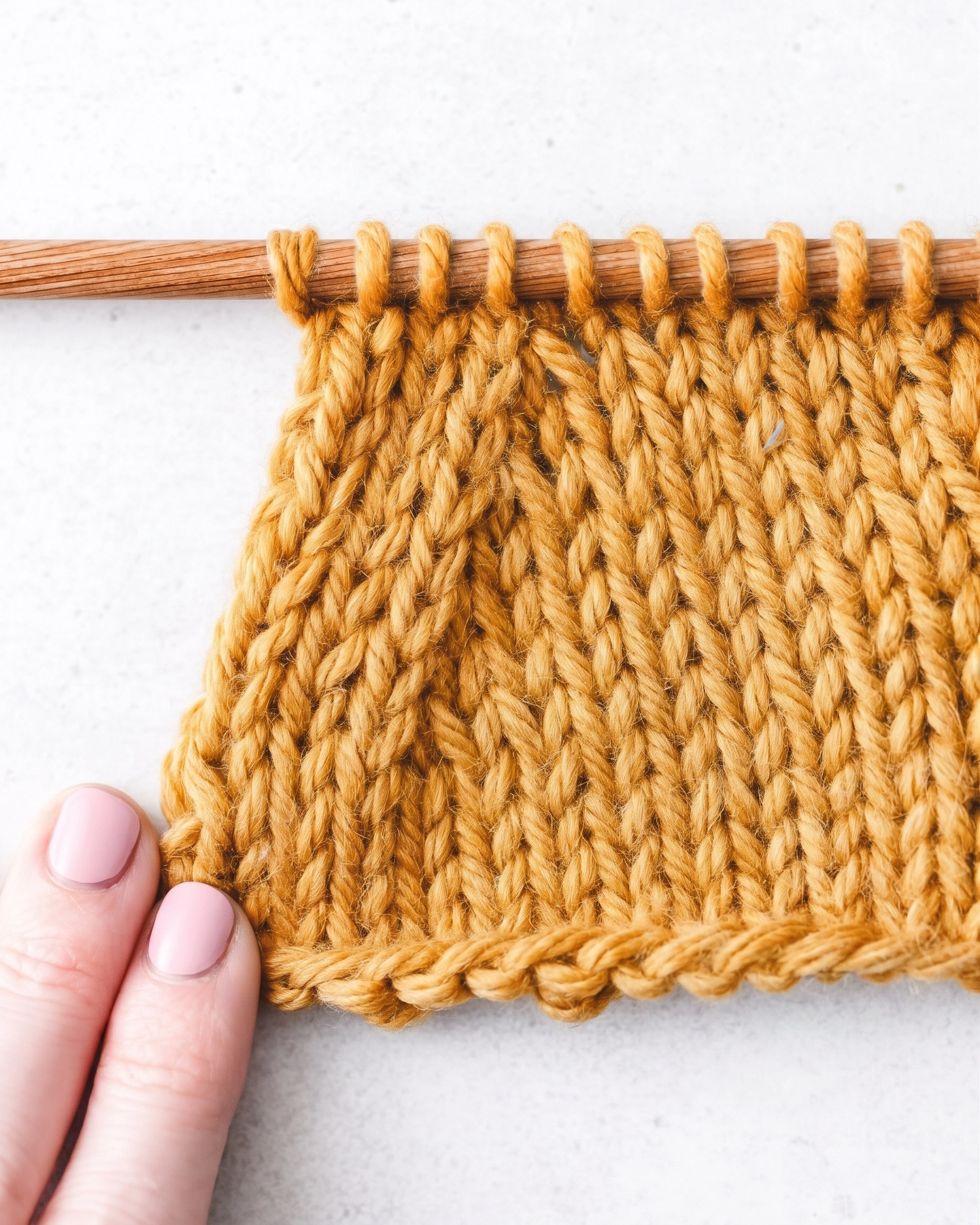
Work the next row according to your swatch fabric. If you are knitting flat stockinette, purl the wrong-side row; see our stockinette tutorial if you need the row sequence.


Fix common k2tog problems
If the right needle catches only one stitch, slow down and separate the two loops at the left-needle tip. Re-enter both front loops before wrapping the yarn.
If both loops are too tight to enter, avoid forcing the needle. Ease the stitches onto the tapered tip or try a needle with a more pointed tip for your practice sample.
An accidental yarn over adds a stitch back. Keep the yarn behind the needles while making the k2tog, and check your count at the end of the row.
If the decrease seems to lean left, verify that you used the front loops and did not work through the back loops. Back-loop decreases have different stitch orientation and should be followed only when a pattern calls for them.
K2tog compared with other decreases
SSK also removes one stitch from a pair, but its line leans left on the knit side. Use the specific decrease in the pattern when a visible matched pair matters.
K2tog through the back loops, often written k2tog tbl, is a separate instruction. It changes how the stitches sit and may show twisted legs; do not treat the two abbreviations as interchangeable.
Purl-two-together, written p2tog, removes one stitch on a purl row. Its visible effect on the public face depends on which side of the fabric you are working, so check the pattern before replacing a knit-side decrease with it.
Quick answers
Can I k2tog in the round? Yes. On a knit round, use the same front-loop movement over the next two stitches. Follow the pattern's marker and placement directions.
Does k2tog count as one stitch? Yes. Two stitches enter the decrease and one stitch leaves it, so the stitch count drops by one.
Which way does it lean? K2tog leans right when viewed from the knit side. Its partner SSK leans left.
Why does my edge look uneven? Check that the decrease sits the instructed number of stitches from the edge on every shaping row. Moving it closer or farther away changes the line.
Make a small swatch with a k2tog on one side and an SSK on the other. Seeing both decreases in the same yarn is the fastest way to recognize which line a pattern is asking you to make.
What’s Next?
Pin this post: Save this tutorial to your Pinterest boards so that you can come back to it later.
Leave a comment: We love to hear your feedback. Tell me in the comments below!
Share on Instagram or Facebook: When you make this project, share it on social media and tag me @iheartdiybystacy. We love to see what you make!
Have questions? Join the Facebook Group!
We hope this article was useful for you! If you have any additional questions, feel free to join my Facebook Group. We created this group for you to share pictures, ask questions, and help each other out.
I hope this article was useful for you! If you have any additional questions, feel free to join my Facebook Group.
Join the group to share pictures, ask questions, and help each other out.
Have a question? Use the form above to submit your question or comment.
I love hearing from you and seeing what you made!